The Letter Before the Charge: How Renewal Reminders Went From Sales Pitch to Law
6 min read
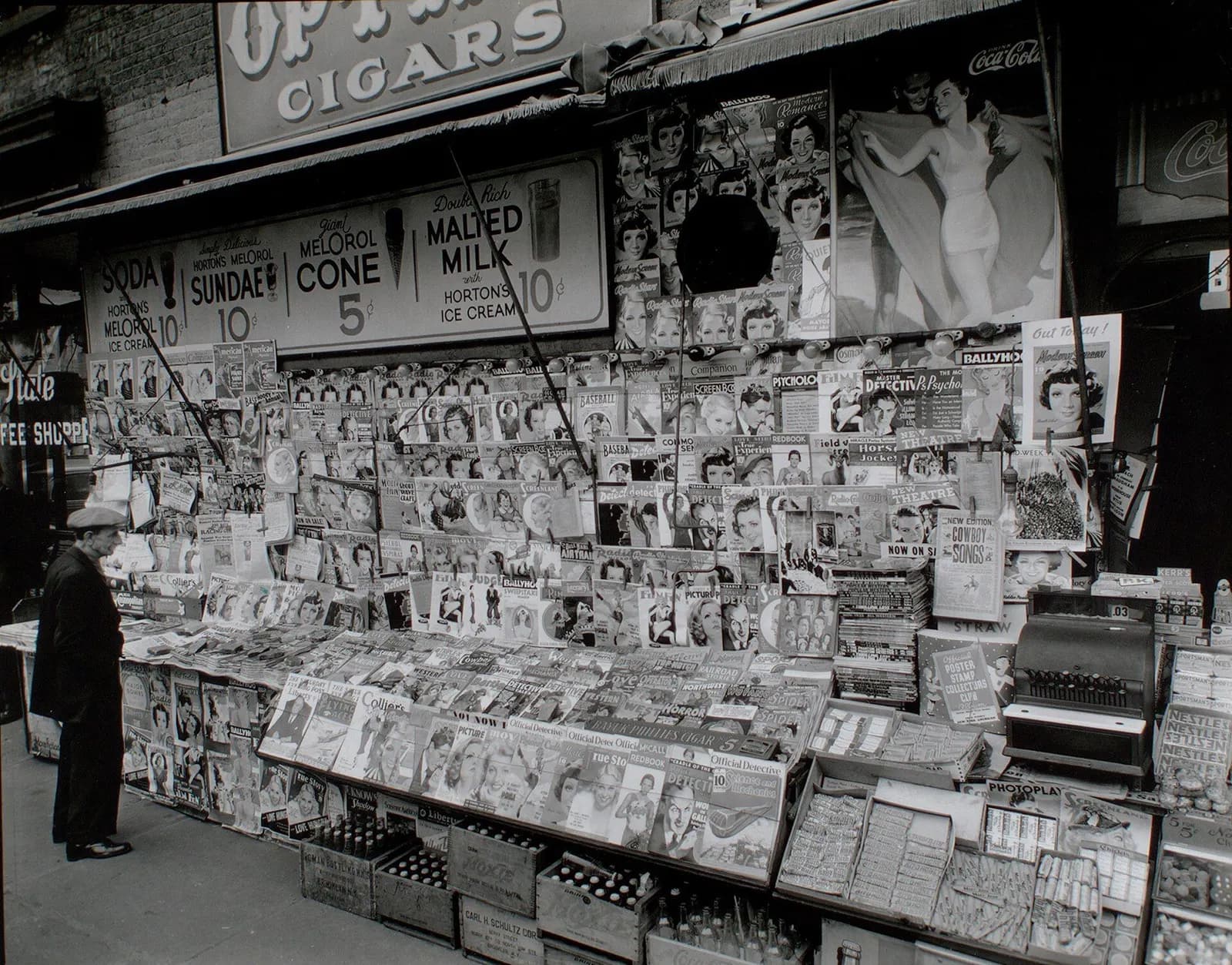

Picture a reader in 1999 who subscribes to a monthly money magazine. Around the time she has five issues left, a package arrives asking her to renew. Over the next few months come more mailings, a postcard, a message wrapped around the cover of the magazine itself, and eventually a phone call.
That is not a nuisance campaign gone wrong. It is the plan. A trade magazine called Chief Marketer described exactly this for Bloomberg Personal Finance, and it raises a question worth following through the mail: when did the renewal notice stop being something sellers were desperate to send and become something the law has to demand?
Seven knocks at the door
The magazine's campaign had seven separate "efforts." It started about six months before the subscription ran out and kept going for a month after it ended. In all, it used three direct mail packages, two cover wraps (one on the next-to-last issue, one on the last), a postcard and a telemarketing call.1
It worked, and mostly early. According to the article, the first effort brought in somewhere between 66% and 75% of the magazine's renewals, and the second added about 10% more.1 Everything after that was chasing the stragglers.
So for a publisher, the reminder was the whole business. A reader who never heard from you was a reader you had lost. The notice was a sales tool, and the more of them you sent, the better.
The letter that stopped coming
Then some publishers found something that needed no reply at all. By 2002 the American Journalism Review was describing "continuous service," where a subscription simply renews and bills you again unless you stop it. One circulation expert, Dan Capell, estimated that about 7% of consumer magazine subscriptions worked this way, and Time's Jeremy Koch said the share reached as high as 30% for some Time titles.2
How readers got into those programs was the argument. The AJR reported that Time's "Preferred Subscriber Automatic Renewal Program" enrolled new and existing subscribers without asking first. The New Republic, by contrast, signed readers up only if they checked a box on the invoice, and the Magazine Publishers Association said a customer "must take an action to demonstrate affirmative consent."2 The AJR also reported that Florida's attorney general was investigating Time after hundreds of consumer complaints, a probe that also covered "look-alike" invoices.2
That phrase hints at the other thing happening to renewal notices: they were becoming bait. In May 2016 the FTC filed a complaint against the operators of what it called "dozens of companies" that mailed "Notice of Renewal/New Order" letters for newspapers and magazines. The mailers named titles like The New York Times and The Wall Street Journal, said the subscription would automatically renew if the reader paid, and described the price as "one of the lowest available rates."3
According to the FTC's complaint, which set out allegations rather than findings, the defendants had no authorization from the publishers, charged up to 40 percent more than newspapers typically charge, and sent people the wrong publications or delayed ones. Some consumers allegedly paid twice, and more than 375 newspapers had told the defendants to stop.3
Put the two stories side by side and a strange picture appears. For some subscriptions, real reminders were fading because sellers no longer needed them. Fake ones worked because people still trusted the real kind.
Lawmakers write the letter in
If the seller will not send the letter, someone can require it. That is roughly what several places have done, each in its own way.
California's AB 2863 became law in September 2024 and applies to contracts entered into, amended or extended on or after July 1, 2025. According to the bill summary, it requires businesses to send an annual reminder that says what the product or service is, how often and how much you are charged, and how to cancel.4
New York's rule is more about timing. For offers that start with a paid term of a year or longer and renew for six months or more, the seller has to send a renewal notice between fifteen and forty-five days before the cancellation deadline, with instructions for cancelling. For a free gift or trial that lasts more than a month, the notice has to arrive at least three days but no more than twenty-one days before the deadline for the first chargeable period.5 In plain terms, the law picks a window when the letter must land, close enough that you remember it and early enough that you can act.
The federal route has been bumpier. The FTC finalized an updated Negative Option Rule in October 2024, but on July 8, 2025 the Eighth Circuit threw out the whole thing. The court's reason was procedural: the FTC had not prepared a preliminary regulatory analysis that the court said was required for rules with an estimated annual economic effect of at least $100 million. The judges did not reach the challenges to what the rule actually said.6 In March 2026 the FTC asked for public comment on whether and how to try again, listing options from keeping the current rule to adopting parts of the vacated one to simply educating consumers and businesses.7 As of late October 2026, no federal click-to-cancel rule is in force.
The United Kingdom is the one to watch, though it has not arrived yet. Its Digital Markets, Competition and Consumers Act 2024 would require a trader to send a "reminder notice" for renewal payments that fall at the end of a six-month period, and for deals with a free or discounted introductory stretch, one before the first full-price renewal too.8 The notice must go out in a reasonable period before the last cancellation date, and the key details must be more prominent than anything else sent at the same time.8 The government says reminders are aimed particularly at trials and contracts of twelve months or more that renew automatically, and that people would get a 14-day cooling-off period after such a renewal.9 But the subscription chapter is still marked as not in force, and the government's April 2026 response says only that it anticipates the regime will start in spring 2027.89
What a letter is really for
You could wonder whether a reminder changes anything. A study called "Selling Subscriptions," by Liran Einav, Benjamin Klopack and Neale Mahoney, suggests it might. When a replaced payment card forced people to decide whether to keep a subscription, many more of them cancelled. The researchers saw this across ten subscriptions, using one card network's data.10
From that, they estimated that inattention raises sellers' revenue by "between 14% and more than 200%" compared with fully attentive customers.10 That range is wide, because it comes from a model, but the direction is clear. Often the charge wasn't hidden at all. People just weren't looking at it until something made them.
That brings us back to our reader in 1999, with a mailbox full of reminders she did not have to ask for. The pleas were annoying, but they did one useful thing: they made her decide. Today, whether you get that moment depends on where you live, what you signed up for and whether the seller's notice is real. The law is a patchwork, and parts of it have not started yet.
So the dependable letter before the charge is the one you write yourself. Subblink keeps every subscription, its price and its renewal date in one place, and sends reminders before renewals and before free trials end, so a charge doesn't catch you by surprise. A simple list with dates works too, as long as you check it. Either way, you are no longer waiting for a seller to knock seven times.
Sources (10)
- The Art of Renewals (Chief Marketer, 15 March 1999) — Chief Marketer
- You're Renewed: Like It or Not (American Journalism Review, December 2002) — American Journalism Review
- FTC Charges Scammers Who Deceived Consumers With Fake Subscription Notices (May 2016) — U.S. Federal Trade Commission
- AB 2863: Automatic renewal and continuous service offers (bill status and summary, 2023-24 session) — CalMatters Digital Democracy
- New York General Business Law section 527-a, Unlawful practices — New York State Senate
- Eighth Circuit Vacates FTC Click-to-Cancel Rule (Custom Communications, Inc. v. FTC) — Latham & Watkins
- FTC Seeks Public Comment in Response to Advance Notice of Proposed Rulemaking Regarding Negative Option Marketing Practices (March 2026) — U.S. Federal Trade Commission
- Digital Markets, Competition and Consumers Act 2024, Part 4, Chapter 2 (Subscription contracts) — legislation.gov.uk
- Government response to consultation on the implementation of the new subscription contracts regime (updated 2 April 2026) — GOV.UK (Department for Business and Trade)
- Selling Subscriptions (NBER Working Paper 31547; American Economic Review, May 2025) — National Bureau of Economic Research
Try Subblink free.
Add your subscriptions and see what you spend each month. On a paid plan, Subblink can scan your Gmail and find them for you. Email scanning works with Gmail only for now.
Start freeFree for unlimited subscriptions. No credit card.