The Penny-in-the-Slot Meter and the Price of Paying as You Go
6 min read
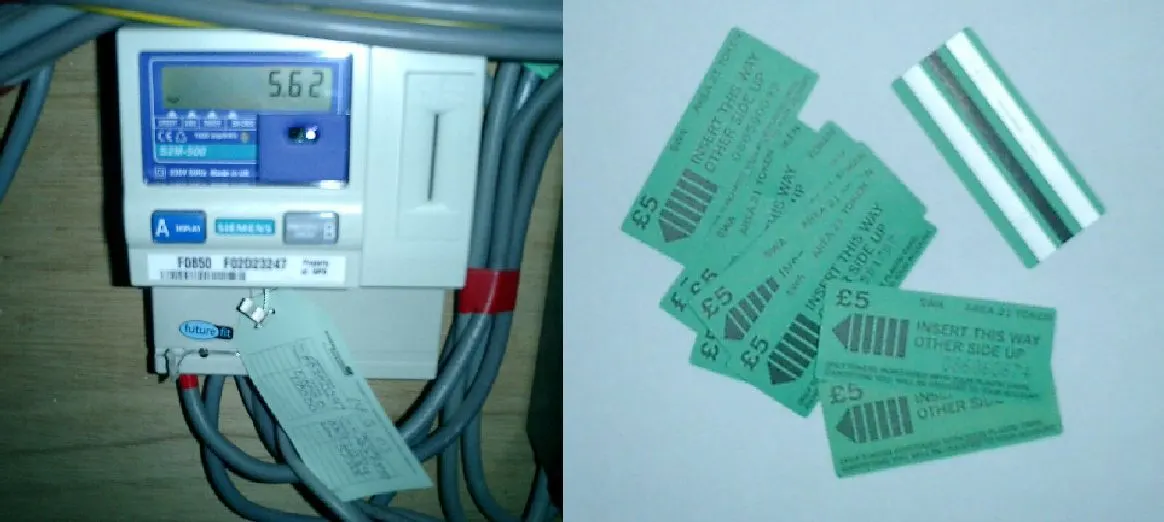

Imagine a kitchen in Ramsgate in the late 1880s. There is a new gas stove, fresh pipework, and a small box on the wall with a slot in it. You drop in a coin, and the gas flows until the coin's worth runs out. No bill arrives at the end of the quarter, and nobody asked you for a deposit.
It sounds like a small convenience. But the same idea, pay first and use later, has now run for well over a century, and in 2023 it ended up in a national scandal. So how did a coin slot on a kitchen wall turn into something regulators and judges had to argue about?
The town where half the houses had no gas
One historian of the industry writes that gas reaching working-class homes "is usually attributed to the invention in 1888 of the prepayment, penny-in-the-slot meter". He adds that the meter alone was not enough. 1 Who first built it is murky. Different records give different dates and names, so the safest thing to say is that it arrived in the late 1880s.
What we can see clearly is the way one town used it. At Ramsgate, the gas manager W. A. Valon noticed that half the houses in town had no gas at all. 1 So he did not just sell stoves. He offered the whole installation, pipes and fittings included.
The meter made that offer possible. Because customers paid in advance, the gas company had no need for a deposit, and a family with little spare cash could still say yes. 1
The numbers show how big the change was. Between 1892 and 1912 the number of gas customers in Britain grew from 2½ million to 7 million, and sales doubled. Most of the new customers were given a stove, so cooking became a bigger business than lighting. 1 To be fair, that count covers all gas customers, not only slot-meter users, and the same history credits several causes.
There was a catch, though. Prepayment customers were typically charged a surcharge of about 25%, called the "prepayment supplement", which helped pay for the installation. 1 Convenience and a higher price arrived together, and they have been travelling together ever since.
From coins to keys
For many years the meters took coins. Then, in the 1980s, tokens replaced them quickly, mostly because of crime and the cost of emptying all those coin boxes. 2 Every coin box was a target for thieves, and every one had to be emptied by hand.
The tokens came in many forms, from magnetic stripe cards to keys to smart cards that held a microprocessor. 2 In 1992 British Gas introduced a system called Quantum, which used a smart card to carry your payment. 2
By then prepayment was no longer a niche. In 1990 about 5% of electricity customers and 4.3% of gas customers paid this way, and one author put the figures at roughly 16% and 9% by 2001. 2
The old price gap had not gone away. In 2016 the Competition and Markets Authority found that about 4 million households were on prepayment meters. It also found that the cheapest prepayment deals cost "£260 to £320 a year more" than direct debit. 3 The CMA brought in a price cap from April 2017 and expected it to cut bills by around £300 million a year. 3
A knock at the door
By the early 2020s, the meter could also arrive in a much less welcome way. In early February 2023, The Times reported that an undercover reporter had gone along with agents working for a debt-collection contractor, Arvato Financial Solutions. The agents used court warrants to fit prepayment meters, and the paper alleged that British Gas sent them into homes of customers with serious vulnerabilities. 4
Things moved fast. Ofgem, the energy regulator, called the allegations "extremely serious", opened an investigation and asked British Gas for an early internal report by 13 February. 4 British Gas's parent company, Centrica, suspended "all warrant activity". 4 On 6 February the courts paused their handling of these warrant applications "with immediate effect". 5
On 10 March 2023, Ofgem announced that all domestic suppliers had signed an updated code of practice on installing these meters without a customer's consent. 5 Later that year, from 8 November, the code became a licence condition, which meant it was no longer a promise but a rule. Suppliers now needed at least 10 attempts to contact the customer and a visit to check on their welfare before any forced install. Staff had to wear body or audio cameras during warrant installs and welfare visits, and each meter fitted under warrant came with £30 of credit. 6
Some households are protected outright. They include homes where everyone is 75 or over with no other support (the line used to be 85), homes with a child under two, and homes where someone needs a constant supply for health reasons. 6 And once a customer has paid off the debt, the supplier must offer to move them off prepayment if they want, subject to credit checks. 6
Where it stands now
The money side has shifted too. The government's Energy Price Guarantee removed the prepayment premium from October 2022, using taxpayer money. That ended on 1 April 2024, and Ofgem put a lasting fix in its place, paid for by other bill payers. 7 Ofgem expected prepayment customers to save about £49 a year, while direct debit customers would pay about £10 more. 7
British Gas's own reckoning came last. In May 2026, Ofgem announced a settlement: £20 million into a redress fund and up to £70 million of energy debt written off for vulnerable customers. 8 Ofgem's chief executive, Tim Jarvis, said the company "fell short in its treatment of an unacceptable number of vulnerable customers". 8 Ofgem added that British Gas had not been active in installing meters under warrant since early February 2023. 8 Separately, eight suppliers paid a combined £73.6 million over their 2022-23 installations. 8
Prepayment is shrinking, but it has not gone away. At the end of 2025, 11.7% of Great Britain's domestic meters were prepayment, down from 14.3% in 2020. 9 The cost that is hardest to see is the one Citizens Advice measured in January 2023. One in three prepayment customers said they had been cut off at least once in the past year because they "could not afford to top up", which the charity said was more than 3 million people. 10 That is survey data, but it points at the oldest problem with paying as you go. When each payment is small, the person with the least slack carries the risk.
What the slot taught us
Go back to that kitchen in Ramsgate. The coin made every payment something you could see and hold. You knew what the gas cost because you had just handed it over.
Modern subscriptions work the other way. The money leaves quietly, a little at a time, and it is easy to lose sight of what you are paying for. An energy meter is not a subscription, and the stakes are different. But the habit is much the same: look at what is going out, and when.
That is the idea behind keeping your own record. Subblink keeps every subscription, its price and its renewal date in one place, so forgotten ones are easier to spot, and it sends reminders before renewals so a charge does not catch you by surprise. It is a small way to get back a little of what the coin slot gave people for free.
Sources (10)
- British Gas plc (entry by Francis Goodall) — Encyclopedia.com (International Directory of Company Histories)
- Prepayment Metering: A Credit to the U.K. Energy Supply Businesses? — Renewable Energy World (Ian White, 1 May 2001)
- CMA puts £300m saving in place for prepayment energy customers — GOV.UK (Competition and Markets Authority)
- British Gas to cease using warrants to enter homes — Law Society Gazette (Ireland)
- Directions from the Senior Presiding Judge and Chief Magistrate: Warrants for pre-payment meters — Judiciary of England and Wales
- New prepayment meter rules extend protections for vulnerable people — Ofgem
- Welcome fall in the price cap but high debt levels remain — Ofgem
- British Gas agrees settlement in relation to Ofgem's investigation of unfair treatment of prepayment meter customers — Ofgem
- Smart Meter Statistics in Great Britain: Quarterly Report to end December 2025 — Department for Energy Security and Net Zero (GOV.UK)
- Kept in the dark: the urgent need for action on prepayment meters — Citizens Advice
Try Subblink free.
Add your subscriptions and see what you spend each month. On a paid plan, Subblink can scan your Gmail and find them for you. Email scanning works with Gmail only for now.
Start freeFree for unlimited subscriptions. No credit card.