The Phone You Paid For Every Year and Never Owned
6 min read
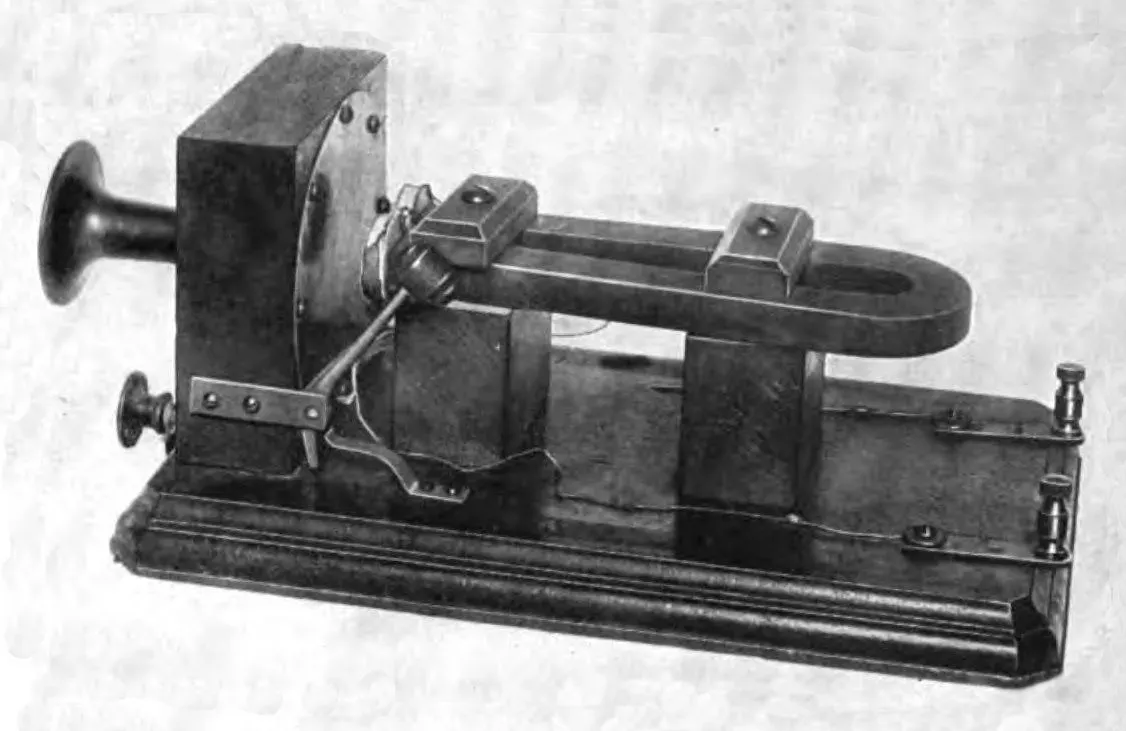

In May 1877, a lawyer in Cambridge, Massachusetts, named Gardiner Hubbard sent out a circular with an offer that sounds almost modern. A telephone would cost $20 a year for social use or $40 a year for business, paid twice a year in advance. The company would keep the instrument in good working order "free of expense," unless you wrecked it through great carelessness.1
Notice what was missing. You were never offered the phone itself. You were offered the use of it, and the instrument stayed on the company's books for as long as you paid. That small choice shaped how Americans lived with their telephones for about a hundred years, and a surprising number of people were still paying for it long after anyone required them to.
Why rent a telephone?
A history of the period says Hubbard got the idea from a client who made shoe-making equipment. That client leased its machines instead of selling them, with payments tied to how many shoes they turned out. Hubbard, still practicing law, borrowed the notion for telephones.2
The same history says leasing gave him "absolute control over the distribution and use of the telephone," along with a way to know who held a legal one. Under that arrangement, "the telephone remained the property of the lessor."2 Customers even strung their own connecting wires, while agents kept 40 percent of the lease payments in the first year and 20 percent afterward. By November 1877, 3,000 phones had been leased.2
The rent was annual then, not monthly, but the shape of the deal was set: the phone was a service you subscribed to, not a thing you had.
A wall that fell in steps
For decades the arrangement was guarded by a single sentence in AT&T's rulebook for customers. Before 1968, it said that "no equipment, apparatus, circuit or device not furnished by the telephone company shall be attached to" the company's lines.3 So you could not plug in a phone you had bought elsewhere, or even a small add-on.
The first crack came in 1956 in a case about a cup-like device called the Hush-A-Phone. A federal appeals court held that banning a customer's own attachment was an "unwarranted interference with the telephone subscriber's right reasonably to use his telephone."3 In plain terms, the court said it was your phone line to use sensibly.
The bigger break came on June 26, 1968, when the FCC decided the Carterfone case. The commission wrote, "We hold that the tariff is unreasonable in that it prohibits the use of interconnecting devices." It struck down the ban, though it noted that carriers could still block devices that actually caused harm and could set reasonable technical standards.3 The FCC also treated the earlier cup case as settling the question, finding the difference between a cup and the Carterfone's coupling immaterial.3
Even then, the door opened slowly. After Carterfone, AT&T's rules routed customer equipment through buffer devices called protective connecting arrangements, and they multiplied, reaching about 1,160,000 in use with modems by July 1978.4 Meanwhile, in October 1975, the FCC ruled that customers could connect their own equipment directly, subject to either registration or self-certification, and in March 1977 a federal appeals court upheld the program.4 By the mid-to-late 1970s, plugging in a phone you had bought yourself was finally possible.
The rent that outlived the monopoly
You might expect leasing to have vanished once ownership was legal. It didn't. Before the 1984 breakup of AT&T, the phone came bundled into your monthly service. Afterward, customers could buy, lease or shop elsewhere, and more than 30 million of them chose to lease.5 Nearly a million were still leasing from an AT&T affiliate about twenty years later.5
By 2004 the fees ranged from $4.45 a month for an old rotary phone to $20.95 for a cordless one with a digital answering machine. The same equipment could be bought for as little as $10.5 A 1998 AARP survey found that 6 percent of people 75 or older leased their phone, compared with 2 percent of people under 65.5 Chris Baker of AARP's policy institute called it "such a rip off."5
Lawyers had already noticed. A class action filed in 1996 in Illinois state court alleged that AT&T's consumer products business and Lucent had misled customers who leased phones, so that they paid more than the phones cost. AT&T and Lucent denied wrongdoing.6 The case was settled in 2002, and AT&T recorded its share of the cost at $132 million before taxes.6 According to the AP, up to $300 million was set aside, but a Lucent spokesman said only $8.4 million was paid to 92,000 people who filed claims.5 The same spokesman added, "As long as people continue to want the service, we will continue to provide it."5
And some people did keep paying. In 2019, a family going through their late father's affairs found that he had leased phones from a New Jersey company since 1984. He paid $20.75 a month for three phones, which the report put at $8,715 over 35 years. His daughter said, "He just continued leasing, thinking that he had to. He didn't know he didn't have to."7 The company's president replied that leasing "may not be for everyone, but we provide a valuable service to our customers who choose to lease."7
Heated seats and an old question
Now picture a new car with heated seats already installed in the cushion, switched off until you pay. That was BMW's plan. It had noticed that about 90 percent of buyers ordered heated seats anyway, so it would fit them in every car and let owners activate them later, by monthly or one-time payment.8
Drivers did not love it. In September 2023, after a backlash that began in 2022, BMW stopped charging monthly for heated seats, though it kept subscriptions for software features such as driver assistance. Its marketing chief said, "It's either in or out," and admitted, "People feel that they paid double, which was actually not true, but perception is reality."8
Lawmakers have taken notice. New York's bill S9348-A would bar manufacturers and dealers from selling subscriptions for in-car features that use hardware already installed at sale and that work after activation without ongoing cost or support. It would set a civil penalty of up to $250 per point of sale for each violation, and it exempts things like navigation updates, satellite radio, telematics and driver-assistance software.9 Its sponsor argues it would improve price transparency. A 2025 version was vetoed, and Gov. Kathy Hochul said she supports "strong consumer protections" but that the bill "limits consumer choices and may increase the costs of new vehicles."910 The 2026 version passed the Senate 57-3 on June 4, 2026. As of October 23, 2026, the Senate's page showed no action by the governor yet.9
Whichever side you land on, notice the echo. In 1877 the question was who owns the telephone. Today it is who owns the heated seat. The charge that surprises people is rarely the dramatic one. It is the modest line that began as a convenience and then kept getting paid without anyone looking.
That is the kind of charge a tracker like Subblink is built to surface: it keeps every subscription, its price and its renewal date in one place, so a forgotten charge is easier to spot. If a phone-rental line from 1984 had sat next to your streaming and software charges, you might have asked the question sooner. Do you want to keep paying for this, or could you simply own it?
Sources (10)
- Notes on the Development of Telephone Service II (Popular Science Monthly, Vol. 69, December 1906, reprinting Hubbard's May 1877 circular) — Wikisource (Popular Science Monthly)
- Alexander Graham Bell and Bell Telephone Co. -- 1873-1878 — History of Computer Communications
- Carterfone, 13 F.C.C.2d 420 (1968), FCC 68-661 — Nicholas Johnson FCC Opinions archive (Federal Communications Commission decision)
- The FCC, Jurisdictional Disputes and Direct Connection of CPE 1973-1978 — History of Computer Communications
- Advocates call phone leasing deals 'rip off' (Associated Press, Aug. 13, 2004) — Lawrence Journal-World / Associated Press
- AT&T Corp. Form 10-Q for the third quarter of 2002 (Sparks v. AT&T and Lucent Technologies note) — U.S. Securities and Exchange Commission (EDGAR)
- Family discovers deceased elderly father had been paying to lease his landline phones (Oct. 2, 2019) — KOMO News
- BMW Is Giving Up on Heated Seat Subscriptions Because People Hated Them (updated Sept. 7, 2023) — The Drive
- NY State Senate Bill S9348A (2025-2026): vehicle feature subscriptions — New York State Senate
- Here's Every Bill That Kathy Hochul Vetoed in 2025 — New York Focus
Try Subblink free.
Add your subscriptions and see what you spend each month. On a paid plan, Subblink can scan your Gmail and find them for you. Email scanning works with Gmail only for now.
Start freeFree for unlimited subscriptions. No credit card.