The Antibiotic That Worked, and the Company That Went Bankrupt
6 min read
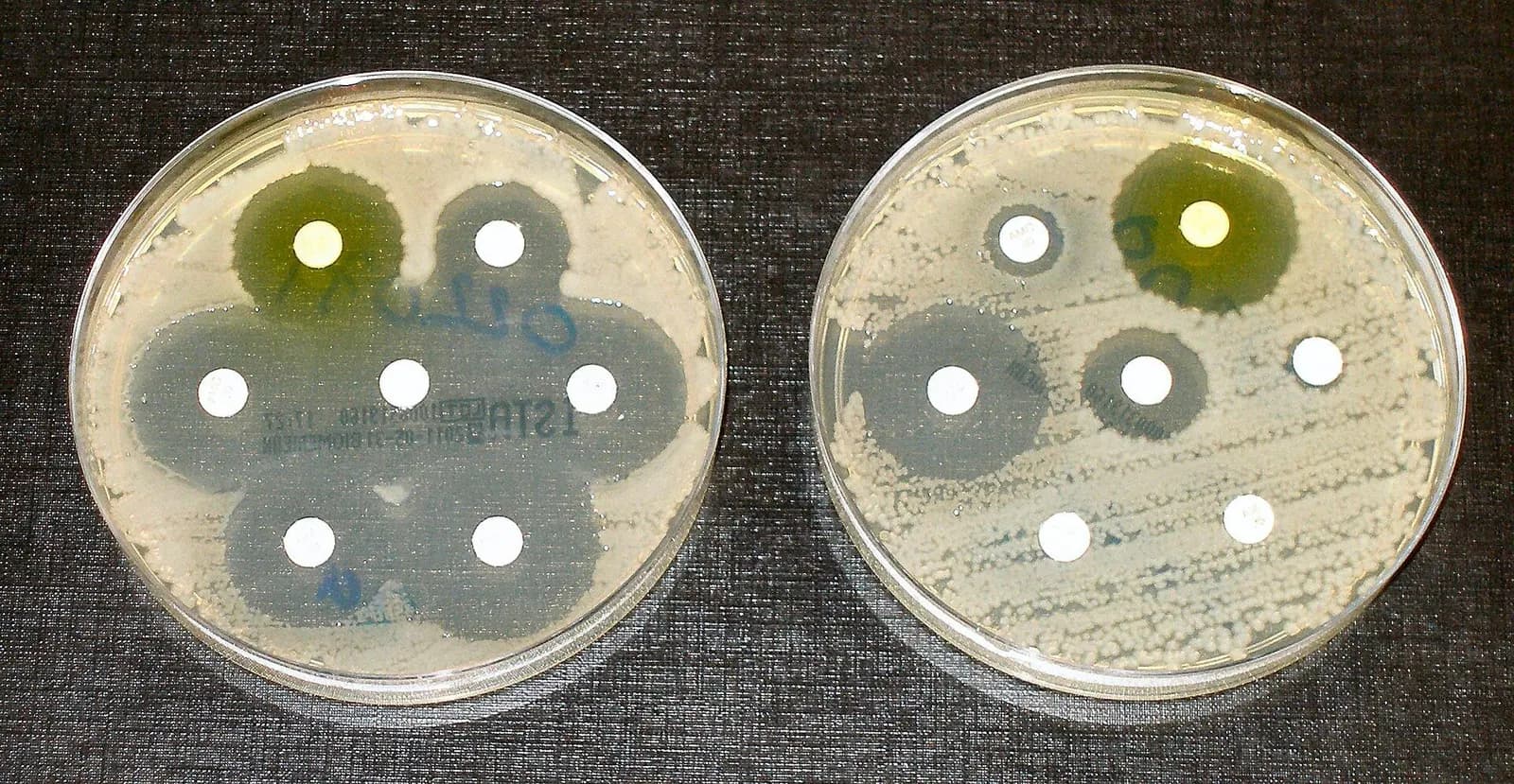

In the last three months of 2018, a company called Achaogen sold about $500,000 worth of a brand-new antibiotic. That was the whole quarter. For all of 2018, the drug brought in under $1 million.1
The drug was Zemdri, approved by the FDA in June 2018. Yet on 15 April 2019, less than a year after approval, Achaogen filed for bankruptcy protection.1 So here is the puzzle. How does a medicine that works end up ruining the people who made it, and what does a streaming-style subscription have to do with the fix?
A good drug, a thin market
Start with how the company looked from the inside. At the end of January 2019 it had $92 million in assets and $120 million in debt, and its staff had shrunk from 230 to about 40.1 Its chief executive, Blake Wise, said the board and management "unanimously agree that this structured sale process represents the best possible solution for the Company."1 That is the polite language of a company running out of road.
Some of the trouble was specific to Achaogen. Zemdri was approved only for certain complicated urinary tract infections, not for bloodstream infections, which kept its market small. A trial in bloodstream infections screened more than 2,000 patients and managed to enrol just 39.1
But there is also a deeper problem, and it applies to almost every new antibiotic. The best antibiotics are the ones doctors save for the hardest cases, because the more a drug is used, the faster bacteria learn to resist it. Careful use is good medicine, and it is also bad for sales. NHS England's own tender documents say investment in new antimicrobials is "widely seen as commercially unattractive."2 A normal market pays a company for every dose sold, and here the healthiest outcome is selling very few.
A "Netflix" deal for hepatitis C
The fix being tried has a familiar shape: stop paying per dose. The idea got an early test with a different disease, hepatitis C, where the cures are effective but so expensive that states rationed them.
On 26 June 2019, Louisiana announced a deal with Asegua Therapeutics, a subsidiary of Gilead, for a cheaper version of the drug Epclusa. The state would pay a fixed amount and could treat as many people as it liked.3 Health secretary Dr Rebekah Gee called it a "Netflix" model, and the company got exclusive access to the state's Medicaid and corrections markets.3 Louisiana estimated that treating everyone at normal per-patient prices would cost $760 million.3
Washington State took a slightly different route. It chose AbbVie's Mavyret, and the state pays the bid price only until its hepatitis C spending hits a set level. After that the drug costs what was described as "a penny a pill." So this was not a pure flat fee, which would have needed a special federal waiver.4
Did it work? A study in JAMA Health Forum found that Louisiana's Medicaid hepatitis C prescription fills rose by an estimated 534.5% compared with a statistical comparison group, while Washington's 16.2% change was not statistically significant.5 The authors add a caution, though. Louisiana dropped its restrictions on who could be treated at the same moment it began the subscription, while Washington had dropped similar rules back in 2016, and COVID-19 halted Washington's planned outreach.5 The subscription may have helped, but it was not the only thing that changed.
England writes the cheque
Now to antibiotics. The idea first appeared in the UK's five-year action plan on drug resistance in January 2019.2 A pilot ran from July 2022 to July 2023 and covered two drugs, cefiderocol (sold as Fetcroja, by Shionogi) and ceftazidime with avibactam (Zavicefta, by Pfizer).2 The NHS's own words for the principle are "breaking the link between the payments companies receive and the number of their antibiotics prescribed."2
After a public consultation, England expanded the scheme in 2024. Under the new version, an expert panel convened by NICE, the body that judges value for the NHS, scores each drug on 17 criteria and places it in one of four bands. Those bands are worth £20m, £15m, £10m or £5m a year.2 Contracts start at three years and can stretch by up to 13 more, and the NHS forecasts up to £1.6bn of investment over 16 years for the first group of drugs.2
Hospitals still buy the drugs through normal channels at an agreed price, which the guidance says "should not be so high as to discourage appropriate use."2 In other words, the subscription pays for the drug being on the shelf, and the invoice price stays modest so nobody is tempted to overuse it.
As of the latest reporting, no winners had been announced. One trade report says suppliers were told awards were likely in November 2026, with contracts starting in early 2027.6 Treat those dates as soft, since they have already slipped once.
Other countries, slowly
One country's cheque can only do so much in a global market. Others are circling the same idea.
In the United States, the PASTEUR Act would have the government sign subscription-style contracts for antibiotics and antifungals, paying fixed yearly amounts however often a drug is used.7 It was first introduced in September 2020 and has been reintroduced several times since, including in the House in February 2026. It has never had a vote.7 In late June 2026 the American Society for Microbiology backed a Senate reintroduction with bipartisan sponsors, pointing to a more objective way of choosing qualifying drugs and stronger rules on careful use.8
Canada's pilot, originally planned for 2024 to 2027, now runs 2026 to 2029, with a call for proposals expected in "late fall 2026." As of June 2026 it had named no drugs and no dollar amount.9 Japan started earlier. Its trial scheme is meant to guarantee "a certain amount of revenue" to companies selling antimicrobials, and its first designated drug, starting in November 2023, was Shionogi's Fetroja.10
Plenty of questions remain open. In 2023 the Office of Health Economics warned that England's two lowest bands "will not be sufficient to generate substantial return or stimulate further" research and development.2 And writing in The Lancet that year, Rebecca Glover said "we have seen no robust or transparent evaluation of the scheme's effect."2 It will take years to learn whether new drugs actually arrive.
What a subscription is for
Go back to that $500,000 quarter. A subscription that pays for being available, not for being used, is a sensible answer to a market where the best outcome is a drug sitting unused on a shelf.
At home it works the other way around. When you pay a flat monthly fee, your bill doesn't fall when your use does, so a service you've stopped touching can quietly keep billing you. That is the reason to keep a list of what you pay for, with prices and renewal dates. Subblink exists for exactly that, putting every subscription, its price and its renewal date in one place so the forgotten ones are easier to spot.
A health system pays to have something there just in case. You should only pay for what you actually use.
Sources (10)
- Achaogen files for bankruptcy protection, seeks asset sale — BioPharma Dive
- Everything you need to know about the NHS antibiotic subscription model — The Pharmaceutical Journal
- Louisiana's Novel 'Subscription' Model For Pricey Hepatitis C Drugs Gains Approval — NPR, via High Plains Public Radio
- AbbVie wins hep C contract with Washington state in latest 'Netflix' deal — BioPharma Dive
- Medicaid Subscription-Based Payment Models and Implications for Access to Hepatitis C Medications — JAMA Health Forum (via PubMed Central)
- How the NHS Is Rewriting the Economics of Antimicrobial Resistance — Odelle Technology
- PASTEUR Act Reintroduced in Congress — Contagion Live
- ASM Applauds Reintroduction of PASTEUR Act to Combat AMR — American Society for Microbiology
- Pilot project to make more antimicrobials available in Canada — Public Health Agency of Canada
- Shionogi news release, 30 November 2023: Fetroja approved in Japan — Shionogi & Co., Ltd.
Try Subblink free.
Add your subscriptions and see what you spend each month. On a paid plan, Subblink can scan your Gmail and find them for you. Email scanning works with Gmail only for now.
Start freeFree for unlimited subscriptions. No credit card.